Quick Summary
Dating without alcohol or drugs can feel overwhelming when substances were once tied to socializing, but it opens the door to authentic connection. NIH research links the quality of romantic relationships to long-term recovery outcomes.
Key Takeaways
- Substances were often woven into socializing, so sober dating can feel daunting at first.
- Removing alcohol creates space for authentic, genuinely compatible connections.
- NIH research ties relationship quality and stability to long-term recovery.
- Timing matters, and early recovery is usually best spent building a stable foundation first.
- Healthy boundaries and honest communication support both sobriety and relationships.
The Role of Romantic Relationships in Recovery
Romantic relationships can have a profound impact on an individual’s recovery journey. According to clinical studies, entering into stable, committed relationships is often associated with decreases in substance use and improved mental health [1]. Conversely, the dissolution of relationships or engaging in unstable, high-stress dating scenarios can be significant triggers for relapse [2]. This duality underscores the importance of approaching dating in sobriety with intention and self-awareness. In early recovery, individuals are often still learning how to manage their emotions, cope with stress, and establish new, healthy routines. Introducing the emotional highs and lows of dating too soon can disrupt this fragile process. The emotional intensity of a new romance can sometimes mimic the neurochemical highs of substance use, leading to what is colloquially known as a ‘dry relapse’ or replacing one addiction with another. Therefore, many addiction professionals and recovery programs, such as Alcoholics Anonymous (AA), recommend waiting at least one year before dating in sobriety. While this is not a strict rule, it serves as a valuable guideline, allowing individuals to solidify their recovery foundation, develop strong coping mechanisms, and gain a deeper understanding of their own needs and boundaries before inviting another person into their lives.Dating During Active Addiction vs. Dating in Sobriety
| Aspect of Dating | Active Addiction | Sobriety |
| Communication | Often impaired by substances; superficial conversations; avoidance of deep emotional topics. | Clear, honest, and intentional; requires vulnerability and active listening. |
| Decision Making | Impulsive choices driven by lowered inhibitions; ignoring red flags. | Thoughtful and deliberate; ability to recognize and respond to unhealthy dynamics. |
| Foundation of Connection | Based on shared substance use or enabling behaviors. | Based on shared values, genuine interests, and mutual respect. |
When to Start Dating in Recovery
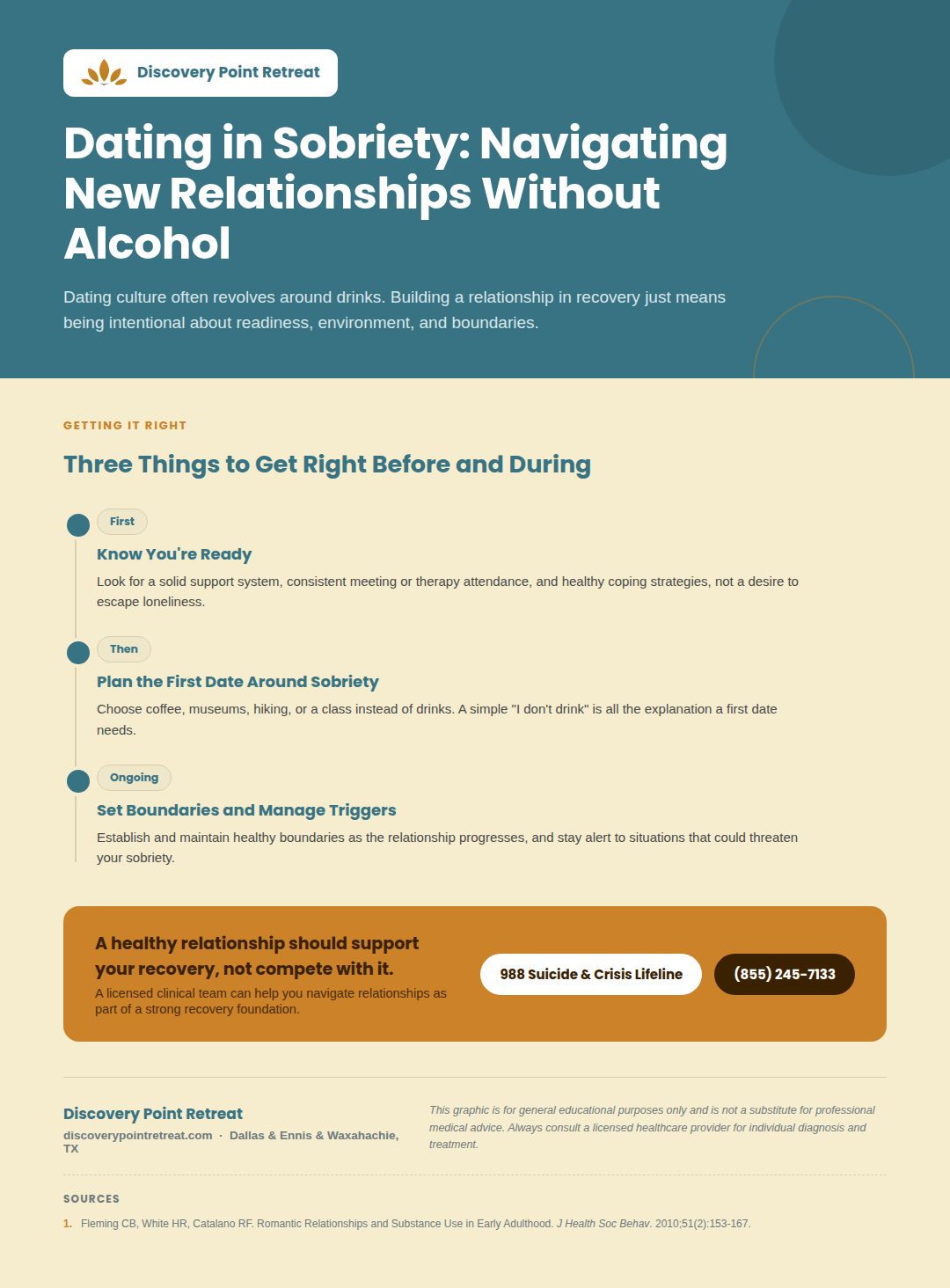
Deciding when to start dating in sobriety is a highly personal choice that should be made in consultation with a sponsor, therapist, or support network. Rather than focusing solely on a specific timeline, it is more beneficial to assess one’s emotional readiness and the stability of their recovery. Signs that you may be ready to navigate new relationships without alcohol include having a solid support system in place, consistently attending support meetings or therapy, and possessing healthy coping strategies for stress and negative emotions. Additionally, being comfortable with who you are and feeling secure in your sobriety are crucial prerequisites. If your primary motivation for dating is to avoid loneliness or distract yourself from the challenges of recovery, it may be an indication that more time is needed to focus on personal growth.Navigating the First Date Without Alcohol
The concept of a first date is often culturally synonymous with meeting for drinks. Navigating this expectation is one of the first hurdles of dating in sobriety. It requires proactive planning and a willingness to step outside traditional dating norms. When planning a date, suggest activities that do not revolve around alcohol. Coffee shops, museums, hiking trails, or attending a class together are excellent alternatives that foster conversation without the pressure to drink. By choosing a sober environment, you create a space where both individuals can engage authentically. A common concern is how and when to disclose your sobriety. You are not obligated to share your entire recovery history on the first date. If offered a drink, a simple ‘I don’t drink’ or ‘I’m not drinking tonight’ is entirely sufficient. As the relationship progresses and trust is established, you can choose to share more about your journey. Most individuals will respect this choice, and those who do not may not be compatible partners for someone prioritizing their recovery.Setting Boundaries and Managing Triggers
Establishing and maintaining healthy boundaries is essential when dating in sobriety. Boundaries protect your recovery and ensure that your needs are met within the relationship. This may include setting limits on the types of environments you are willing to socialize in, such as avoiding bars or parties where heavy drinking is the main focus. It is also important to be mindful of your partner’s relationship with alcohol. While it is possible for a person in recovery to successfully date someone who drinks moderately, it requires clear communication and mutual respect. If a partner’s drinking habits trigger cravings or cause discomfort, it is crucial to address the issue honestly. Prioritizing your recovery must always come first, even if it means stepping away from a relationship that jeopardizes your sobriety. Furthermore, dating can naturally bring up feelings of rejection, insecurity, or anxiety. Having a strong support system, such as a sponsor, therapist, or supportive friends, is vital for processing these emotions safely, rather than turning to substances as a coping mechanism.People Also Ask (FAQs)
Is the ‘one-year rule’ for dating in recovery mandatory?
While not a strict clinical mandate, the recommendation to wait one year before dating in sobriety is widely endorsed by addiction professionals. The first year of recovery is a critical period for establishing new habits, healing the brain, and building a strong support network. Waiting allows individuals to focus entirely on their own well-being before taking on the complexities of a romantic relationship.How do I explain my sobriety to someone I am dating?
Disclosure should happen at your own pace. Initially, a simple statement that you do not drink is enough. As you build trust and feel more comfortable, you can explain that you are in recovery and that sobriety is a priority in your life. A supportive partner will respect your boundaries and appreciate your honesty.Can I date someone who drinks if I am in recovery?
Yes, many people in recovery have successful relationships with partners who drink moderately. However, it requires strong boundaries, open communication, and a partner who respects your sobriety. If their drinking becomes a trigger for you, it is important to reevaluate the relationship to protect your recovery.Finding Support at Discovery Point Retreat
Navigating the complexities of life and dating in sobriety requires a strong foundation and ongoing support. At Discovery Point Retreat, we understand that recovery encompasses every aspect of an individual’s life, including building healthy, meaningful relationships. Our comprehensive treatment programs are designed to equip you with the coping skills, emotional resilience, and self-awareness needed to thrive in long-term sobriety. Whether you are taking your first steps toward recovery or seeking support to maintain your sobriety while navigating new life challenges, our compassionate team is here for you. We offer individualized therapy, group support, and evidence-based treatments that address the root causes of addiction and foster holistic healing. Call us at (855) 245-7133 or visit discoverypointretreat.com/contact-us/ to learn more about how Discovery Point Retreat can support your journey to a fulfilling, sober life.References
[1] Fleming, C. B., White, H. R., & Catalano, R. F. (2010). Romantic Relationships and Substance Use in Early Adulthood: An Examination of the Influences of Relationship Type, Partner Substance Use, and Relationship Quality. Journal of Health and Social Behavior, 51(2), 153–167. National Institutes of Health (NIH). https://pmc.ncbi.nlm.nih.gov/articles/PMC2904652/ [2] Fleming, C. B., White, H. R., Oesterle, S., Haggerty, K. P., & Catalano, R. F. (2010). Romantic Relationship Status Changes and Substance Use Among 18- to 20-Year-Olds. Journal of Studies on Alcohol and Drugs, 71(6), 847–856. National Institutes of Health (NIH). https://pmc.ncbi.nlm.nih.gov/articles/PMC2965298/ [3] Kitzinger, R. H., Jr., et al. (2023). Habits and Routines of Adults in Early Recovery From Substance Use Disorder: Clinical and Research Implications From a Mixed Methodology Exploratory Study. Substance Abuse: Research and Treatment, 17. National Institutes of Health (NIH). https://pmc.ncbi.nlm.nih.gov/articles/PMC9926005/Sources
- National Institute on Drug Abuse (NIDA), Treatment and Recovery
- National Institute on Drug Abuse (NIDA), Drug Misuse and Addiction
Crisis and Support Resources
- 988 Suicide and Crisis Lifeline. Call or text 988, or chat at 988lifeline.org. Free, confidential support 24/7.
- SAMHSA National Helpline. Call 1-800-662-HELP (4357) or visit the SAMHSA National Helpline page for free, confidential referrals to local treatment.
- 911. For any medical emergency, call 911 immediately.
This article is general education and is not medical advice.