Quick Summary
The legal profession’s high stakes and relentless pressure fuel a quiet epidemic of substance use and mental health struggles. A landmark ABA and Hazelden Betty Ford study found that attorneys face problematic drinking rates at far higher levels than the general population.
Key Takeaways
- The legal profession’s culture often discourages lawyers from acknowledging their own struggles.
- A 2016 ABA and Hazelden Betty Ford study found attorneys drink problematically at higher rates than the general public.
- High stakes, adversarial conflict, and constant pressure all raise the risk.
- Stigma and fear of professional consequences keep many from seeking help.
- Confidential, specialized care can support lasting recovery for legal professionals.
The Statistics: The Scope of the Problem
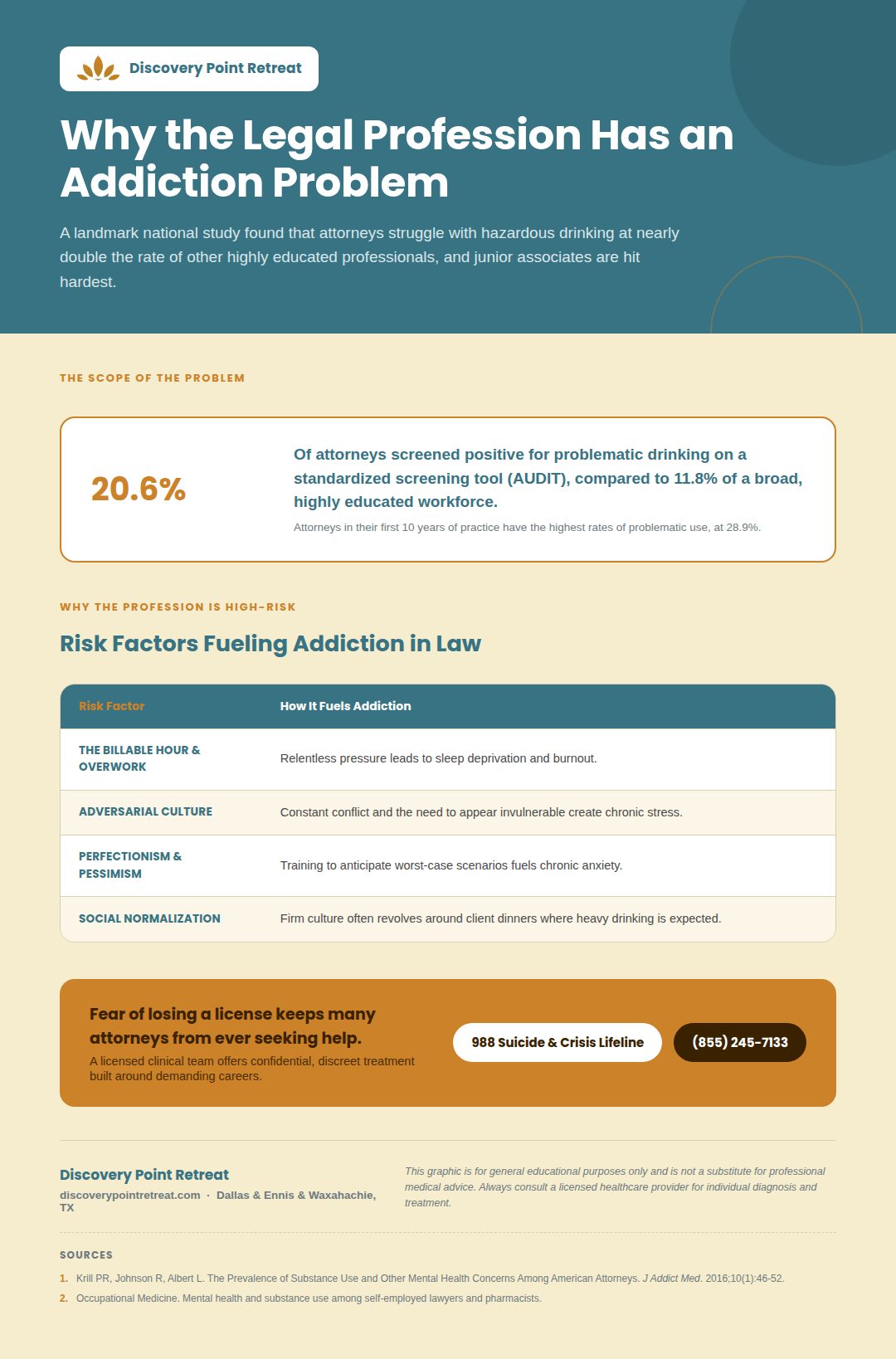
The 2016 study, which surveyed nearly 13,000 licensed attorneys across the United States, provided a stark look at the behavioral health crisis in the legal field. The findings shattered the misconception that only veteran trial lawyers succumb to the pressure of the job.- 20.6% of attorneys screen positive for hazardous, harmful, and potentially alcohol-dependent drinking (compared to 11.8% of a broad, highly educated workforce).
- Attorneys in the first 10 years of practice experience the highest rates of problematic alcohol use (28.9%).
- Junior associates have the highest rates of problematic use among firm positions.
- 28% of attorneys experience symptoms of depression, 19% experience anxiety, and 23% experience high stress.
Why Are Lawyers at Higher Risk for Addiction?
The intersection of personality traits drawn to the law and the environmental demands of the profession creates a perfect storm for substance use disorders.| Risk Factor | How It Fuels Addiction | Common Substances |
| The Billable Hour & Overwork | Relentless pressure to produce leads to sleep deprivation and burnout. | Stimulants (Adderall, cocaine) to stay awake; Alcohol to wind down. |
| Adversarial Culture | Constant conflict and the need to appear invulnerable create chronic stress and emotional suppression. | Alcohol (used as a socially acceptable coping mechanism). |
| Perfectionism & Pessimism | Lawyers are trained to anticipate worst-case scenarios, leading to chronic anxiety and depressive thinking. | CNS Depressants (benzodiazepines, alcohol) to numb anxiety. |
| Social Normalization | Firm culture often revolves around networking events, client dinners, and celebrations where heavy drinking is expected. | Alcohol. |
The Dangers of Co-Occurring Disorders
The NIH defines co-occurring disorders (or dual diagnosis) as the simultaneous presence of a substance use disorder and a mental health condition. In the legal profession, this is incredibly common. The 2016 study revealed significantly higher levels of depression, anxiety, and stress among attorneys screening positive for problematic alcohol use. Whether an attorney drinks to cope with their anxiety, or develops depression as a result of chronic drinking, the outcome is the same: the conditions fuel one another. Effective treatment must address both the substance use and the underlying mental health distress simultaneously.Barriers to Seeking Treatment
Despite having greater access to financial resources and healthcare than many other populations, lawyers are notoriously hesitant to seek help.Fear of Professional Repercussions
The most significant barrier to treatment is the fear of losing one’s license to practice. Many attorneys worry that seeking help for a substance use disorder or mental health issue will trigger a disciplinary review by the state bar association or character and fitness committees.Stigma and Reputation
In a profession where reputation is currency, admitting to a struggle is often viewed as a fatal weakness. The 2016 study found that the top two barriers to treatment were not wanting others to find out (50.6%) and concerns regarding privacy or confidentiality (44.2%).Confidential Dual Diagnosis Treatment at DPR
Recovery for legal professionals requires an environment built around strict confidentiality and discretion and understands the specific psychological demands of the field. At Discovery Point Retreat, we provide highly confidential medical detox and residential treatment. Our dual diagnosis approach utilizes Cognitive Behavioral Therapy (CBT) and Dialectical Behavior Therapy (DBT) to help attorneys manage stress, dismantle perfectionism, and develop healthy coping mechanisms that do not rely on substances. We also coordinate with Lawyer Assistance Programs (LAPs) when appropriate to ensure a protected, supported transition back to practice.Frequently Asked Questions
Will I lose my law license if I go to rehab?
In most cases, voluntarily seeking treatment is viewed favorably by state bar associations and Lawyer Assistance Programs (LAPs). The greater risk to your license is a DUI, malpractice, or an ethics violation resulting from unmanaged addiction.Why do new lawyers have the highest rates of addiction?
The transition from law school to practice involves crushing debt, immense pressure to prove oneself, and the sudden reality of the billable hour. This combination of high stress and low autonomy makes junior associates particularly vulnerable to self-medication.Is treatment completely confidential?
Yes. Treatment centers are bound by strict federal privacy laws (HIPAA and 42 CFR Part 2). Information regarding your presence in treatment or your medical records cannot be shared with your firm, clients, or the state bar without your explicit written consent. You do not have to choose between your career and your health. If you are an attorney struggling with substance use, call Discovery Point Retreat today at (855) 245-7133 or visit discoverypointretreat.com/contact-us/ for a completely confidential consultation.References
[1] Krill PR, Johnson R, Albert L. The Prevalence of Substance Use and Other Mental Health Concerns Among American Attorneys. J Addict Med. 2016;10(1):46-52. https://pmc.ncbi.nlm.nih.gov/articles/PMC4736291/[2] Journal of Addiction Medicine. The Prevalence of Substance Use and Other Mental Health Concerns Among American Attorneys.[3] Occupational Medicine. Mental health and substance use among self-employed lawyers and pharmacists.Sources
- Substance Abuse and Mental Health Services Administration (SAMHSA), Drug-Free Workplace Programs
- National Institute on Drug Abuse (NIDA), Treatment and Recovery
Crisis and Support Resources
- 988 Suicide and Crisis Lifeline. Call or text 988, or chat at 988lifeline.org. Free, confidential support 24/7.
- SAMHSA National Helpline. Call 1-800-662-HELP (4357) or visit the SAMHSA National Helpline page for free, confidential referrals to local treatment.
- 911. For any medical emergency, call 911 immediately.
This article is general education and is not medical advice.