Quick Summary
Leaving military service can mean facing trauma, chronic pain, and the loss of structure, and many Veterans turn to substances to cope. The VA identifies substance use disorders as a critical crisis among Veterans, often alongside PTSD and depression.
Key Takeaways
- The shift from military to civilian life is a profound psychological transition.
- Trauma, chronic pain, and lost structure raise Veterans’ risk for substance use.
- The VA calls substance use disorders a critical health crisis among Veterans.
- These disorders often co-occur with PTSD and depression.
- Effective care requires understanding military culture and service-related trauma.
The Statistics: Substance Use in the Veteran Population
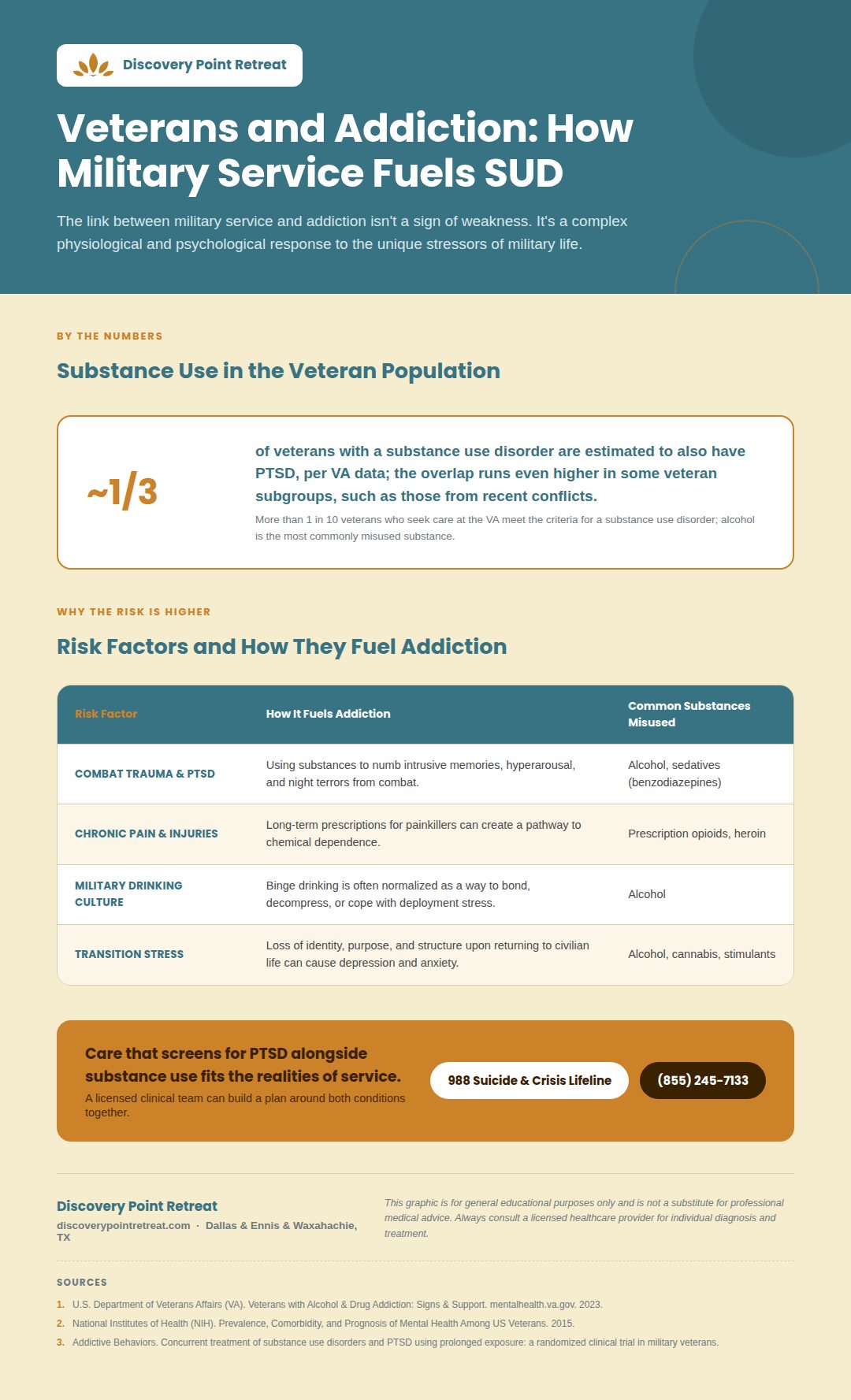
The prevalence of addiction among Veterans is significantly higher than in the general civilian population. Clinical data from the National Institutes of Health (NIH) and the VA highlights the severity of the issue: * More than 1 in 10 Veterans who seek care at the VA meet the criteria for a substance use disorder. * Alcohol is the most commonly misused substance, with heavy drinking rates notably higher among military personnel. * Among Veterans of the Iraq and Afghanistan wars (OEF/OIF), the rate of co-occurring PTSD and SUD is exceptionally high, with up to 63% of Veterans diagnosed with SUD also meeting criteria for PTSD.Why Are Veterans at Higher Risk for Addiction?
The link between military service and addiction is not a sign of weakness; it is a complex physiological and psychological response to the unique stressors of military life.| Risk Factor | How It Fuels Addiction | Common Substances Misused |
| Combat Trauma & PTSD | Veterans use central nervous system depressants to numb intrusive memories, hyperarousal, and night terrors associated with combat. | Alcohol, Sedatives (Benzodiazepines) |
| Chronic Pain & Injuries | Physical injuries sustained during service often lead to long-term prescriptions for powerful painkillers, creating a pathway to chemical dependence. | Prescription Opioids, Heroin |
| Military Drinking Culture | Binge drinking is often normalized in the military as a way to bond, decompress, or cope with the stress of deployment. | Alcohol |
| Transition Stress | The loss of identity, purpose, and the rigid structure of the military can cause profound depression and anxiety upon returning to civilian life. | Alcohol, Cannabis, Stimulants |
The Dangerous Intersection of PTSD and Addiction
For Veterans, PTSD and addiction almost always operate as a vicious cycle. The VA notes that individuals with PTSD are highly likely to use alcohol or drugs to self-medicate their symptoms. While alcohol may temporarily suppress the hyperactive amygdala (the brain’s fear center), the relief is fleeting. As the substance wears off, the brain experiences a rebound effect, causing anxiety, paranoia, and insomnia to return with even greater intensity. Over time, the Veteran requires more of the substance just to achieve baseline functioning, leading to full-blown addiction.Barriers to Seeking Treatment
Despite the high rates of SUD, many Veterans do not seek help. The military ethos of self-reliance and mental toughness can create a profound stigma around admitting a struggle with mental health or addiction. Veterans often fear that seeking treatment will be viewed as a failure or that civilian therapists will not understand their combat experiences.Dual Diagnosis Treatment for Veterans at DPR
Because addiction in Veterans is almost always tied to trauma or chronic pain, treating the substance use alone is ineffective. At Discovery Point Retreat, we utilize an integrated dual diagnosis approach. Our programs include medical detox, trauma-focused therapies like EMDR (Eye Movement Desensitization and Reprocessing), and Cognitive Behavioral Therapy (CBT). We provide a safe, structured environment where Veterans can process their trauma without relying on substances to survive it.Frequently Asked Questions
Is alcohol use disorder common among Veterans?
Yes, alcohol use disorder is the most prevalent substance use issue among Veterans, largely due to the normalization of heavy drinking in military culture and its use as a coping mechanism for stress.Can the VA help with addiction treatment?
Yes, the VA offers SUD treatment programs. However, many Veterans prefer private facilities like Discovery Point Retreat for more immediate access, specialized dual diagnosis care, and privacy.Why do so many Veterans struggle with opioid addiction?
Veterans experience high rates of chronic pain due to service-related injuries. The frequent prescribing of opioid painkillers for these injuries has led to significant rates of dependence and addiction. You served your country; now let us serve you. If you are a Veteran struggling with addiction, trauma, or the transition to civilian life, Discovery Point Retreat can help. Contact us today at (855) 245-7133 or visit discoverypointretreat.com/contact-us/ to learn about our specialized dual diagnosis programs.References
[1] U.S. Department of Veterans Affairs (VA). (2023). Veterans with Alcohol & Drug Addiction: Signs & Support. mentalhealth.va.gov. [2] National Institutes of Health (NIH). (2015). Prevalence, Comorbidity, and Prognosis of Mental Health Among US Veterans. pmc.ncbi.nlm.nih.gov.[3] Addictive Behaviors. Concurrent treatment of substance use disorders and PTSD using prolonged exposure: A randomized clinical trial in military veterans.Veterans seeking help also have specific resources worth knowing about. The Department of Veterans Affairs offers substance use and mental health services, and the Veterans Crisis Line connects service members and their families to trained responders any time of day. Treatment that screens for co-occurring conditions like PTSD and depression, rather than addressing substance use alone, tends to fit the realities of military service more closely. Connecting with other veterans in recovery can also restore some of the camaraderie that civilian life often lacks, which supports long-term healing.
Related Reading
- Anger and Addiction: How Unmanaged Rage Fuels Substance Use
- LGBTQ+ and Addiction: Higher Rates, Unique Barriers to Care
- Workplace Addiction: What Employers Can Do to Help Employees
- Using an HSA or FSA to Pay for Addiction Treatment
Sources
- U.S. Department of Veterans Affairs, Substance Use Treatment for Veterans
- National Institute on Drug Abuse (NIDA), Treatment and Recovery
Crisis and Support Resources
- 988 Suicide and Crisis Lifeline. Call or text 988, or chat at 988lifeline.org. Free, confidential support 24/7.
- SAMHSA National Helpline. Call 1-800-662-HELP (4357) or visit the SAMHSA National Helpline page for free, confidential referrals to local treatment.
- 911. For any medical emergency, call 911 immediately.
This article is general education and is not medical advice.