Quick Summary
Out-of-pocket treatment costs stop many people from getting care, but HSA and FSA funds can help. The IRS recognizes substance use treatment as a qualified medical expense, so you can pay with pre-tax dollars.
Key Takeaways
- Deductibles, copays, and travel can make treatment costly even with insurance.
- The IRS recognizes addiction treatment as a qualified medical expense.
- HSA and FSA funds let you pay for rehab with pre-tax dollars.
- IRS Publication 502 covers inpatient treatment costs as deductible medical expenses.
- Using these accounts can meaningfully lower the overall cost of recovery.
Does the IRS Consider Rehab a Qualified Medical Expense?
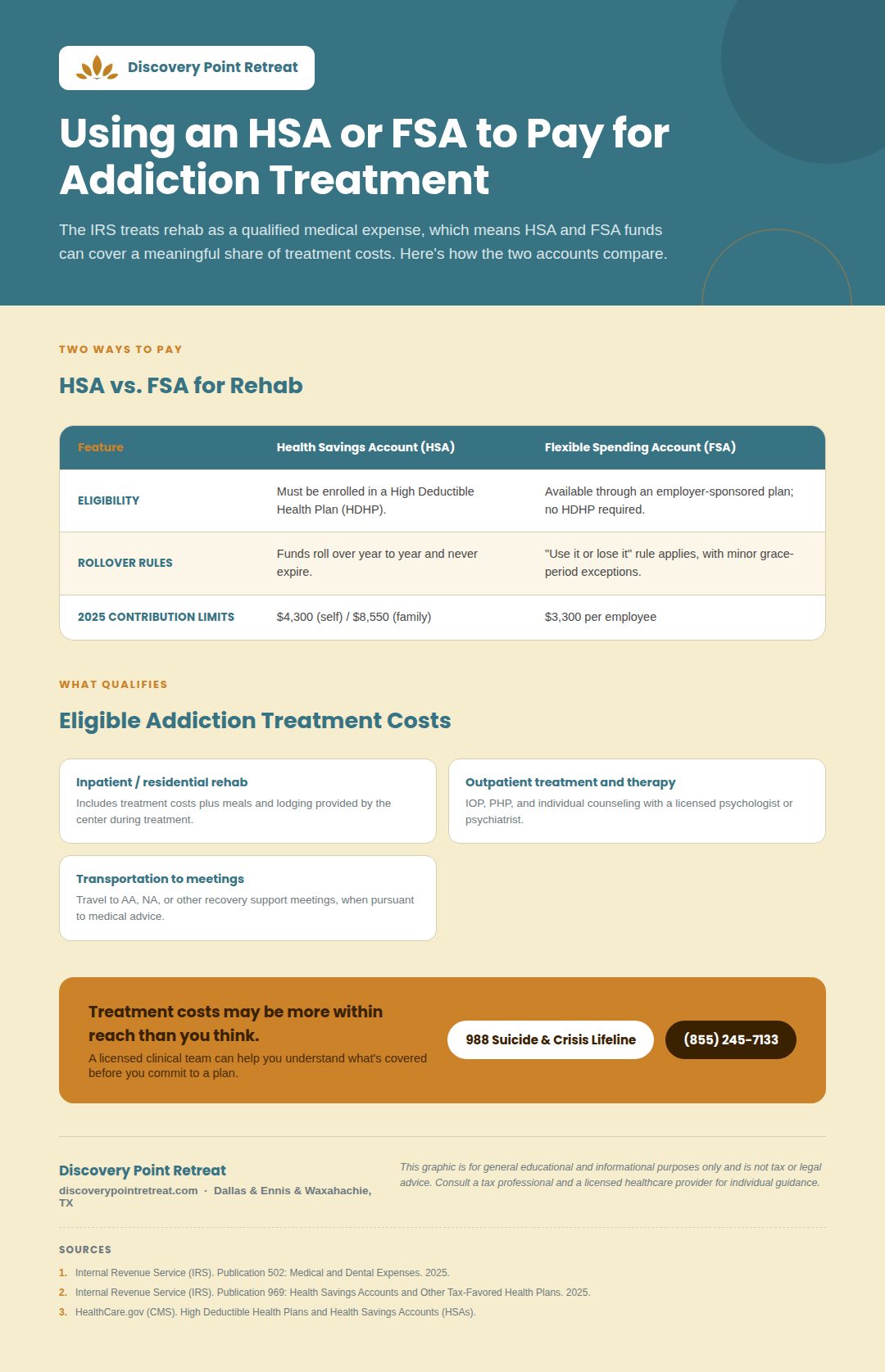
Yes. According to IRS Publication 502 (Medical and Dental Expenses), the cost of inpatient treatment at a therapeutic center for drug or alcohol addiction is fully tax-deductible as a medical expense. Because HSA and FSA funds can be used for any IRS-qualified medical expense, these accounts can be used to cover the costs of rehab [1]. This includes not only the clinical treatment itself but also associated costs, provided they are essential to the recovery process. By using pre-tax dollars from your HSA or FSA, you are effectively discounting the cost of treatment by your marginal tax rate.HSA vs. FSA: What You Need to Know
| Feature | Health Savings Account (HSA) | Flexible Spending Account (FSA) |
| Eligibility | Must be enrolled in a High Deductible Health Plan (HDHP). | Available through an employer-sponsored plan; no HDHP required. |
| Rollover Rules | Funds roll over year to year and never expire. | “Use it or lose it” rule applies (with minor grace period/carryover exceptions). |
| 2025 Contribution Limits | $4,300 (Self) / $8,550 (Family) [2]. | $3,300 per employee [2]. |
What Addiction Treatment Costs Can You Pay For?
The IRS provides clear guidelines on what specific expenses qualify when using an HSA or FSA for addiction treatment [1]. Eligible expenses typically include:- Inpatient and Residential Rehab
- Outpatient Treatment and Therapy
- Transportation to Support Meetings
How to Use Your HSA or FSA for Rehab
Using these funds requires careful documentation to ensure compliance with IRS regulations. First, obtain a Letter of Medical Necessity (LMN) from a physician or licensed mental health professional stating that the treatment is medically necessary to treat a diagnosed substance use disorder. Second, keep all itemized receipts, invoices, and Explanation of Benefits (EOB) statements from the treatment center. Finally, you can either use your HSA/FSA debit card directly at the facility or pay out-of-pocket and submit a claim for reimbursement.People Also Ask (FAQs)
Can I use my HSA to pay for a family member’s rehab?
Yes. You can use your HSA funds to pay for qualified medical expenses for yourself, your spouse, and any dependents you claim on your tax return, even if they are not covered by your High Deductible Health Plan (HDHP) [2].What happens if I use FSA funds for non-qualified expenses?
If you use FSA or HSA funds for expenses not approved by the IRS, you will be required to pay income tax on the distribution, plus a 20% penalty (for HSAs) if you are under age 65 [2].Does an FSA cover sober living homes?
Sober living homes may qualify if the stay is deemed medically necessary and you have a Letter of Medical Necessity from a doctor, but you should verify this with your FSA administrator as rules can be strict regarding lodging outside of a clinical facility.Maximize Your Resources at Discovery Point Retreat
Navigating the financial aspects of addiction treatment can feel overwhelming, but you do not have to do it alone. At Discovery Point Retreat, our admissions specialists are experts in maximizing your available resources, including health insurance benefits, HSAs, and FSAs. We will work directly with your insurance provider and account administrators to determine exactly what is covered, helping you utilize your pre-tax dollars to offset deductibles and out-of-pocket costs for our medical detox, residential, and outpatient programs. Don’t let financial confusion delay your recovery. Call us today at (855) 245-7133 or visit discoverypointretreat.com/contact-us/ for a free, confidential benefits verification.References
[1] Internal Revenue Service (IRS). (2025). Publication 502: Medical and Dental Expenses. https://www.irs.gov/publications/p502 [2] Internal Revenue Service (IRS). (2025). Publication 969: Health Savings Accounts and Other Tax-Favored Health Plans. https://www.irs.gov/publications/p969[3] HealthCare.gov (CMS). High Deductible Health Plans and Health Savings Accounts (HSAs).Before using these funds, it helps to confirm which costs qualify and to keep clear records. Treatment services, many therapy sessions, and prescribed medications are commonly eligible, while general wellness expenses usually are not. Save itemized receipts and any documentation of medical necessity from your provider, since plan administrators may request them. If you are unsure whether a specific expense qualifies, ask your HSA or FSA administrator directly, and consider speaking with a tax professional so you make the most of your pre-tax dollars.
Related Reading
- What HIPAA Means for Your Privacy in Addiction Treatment
- FMLA and Addiction Treatment: Your Job Is Protected
- What the Research Says: Evidence-Based Addiction Treatment
- National Nurses Week: Honoring Addiction Treatment Nurses
Sources
- Internal Revenue Service, Publication 502: Medical and Dental Expenses
- National Institute on Drug Abuse (NIDA), Treatment and Recovery
Crisis and Support Resources
- 988 Suicide and Crisis Lifeline. Call or text 988, or chat at 988lifeline.org. Free, confidential support 24/7.
- SAMHSA National Helpline. Call 1-800-662-HELP (4357) or visit the SAMHSA National Helpline page for free, confidential referrals to local treatment.
- 911. For any medical emergency, call 911 immediately.
This article is general education and is not medical advice.