Why Finding the Right Drug and Alcohol Facilities Near You Matters
Sources Used:
- California Department of Health Care Services (DHCS) SUD Directories
- Los Angeles County Substance Abuse Service Helpline (SASH)
- Orange County Health Care Agency (DMC-ODS)
- SAMHSA FindTreatment.gov Locator
- SAMHSA National Directory 2024
- 988 Suicide & Crisis Lifeline
- Impact Drug & Alcohol Treatment Center (Facility Information)
Key Takeaways:
- Drug and alcohol facilities near me can be located through official state directories like California DHCS and national tools like SAMHSA’s FindTreatment.gov.
- Treatment options include medically supervised detox, residential care, outpatient programs, and recovery housing.
- Helplines provide 24/7 support: LA County SASH at 1-844-804-7500 and the national 988 Crisis Lifeline.
- Specialized programs exist for veterans, pregnant women, young adults, and DUI offenders.
- Evidence-based therapies like CBT, DBT, and MAT are standard in quality facilities.
- Verifying facility licenses and insurance acceptance is essential before admission.

Drug and alcohol facilities near me offer hope and healing for individuals struggling with addiction. Finding the right treatment center is the first crucial step toward lasting recovery.
Quick Answer: How to Find Drug and Alcohol Facilities Near You
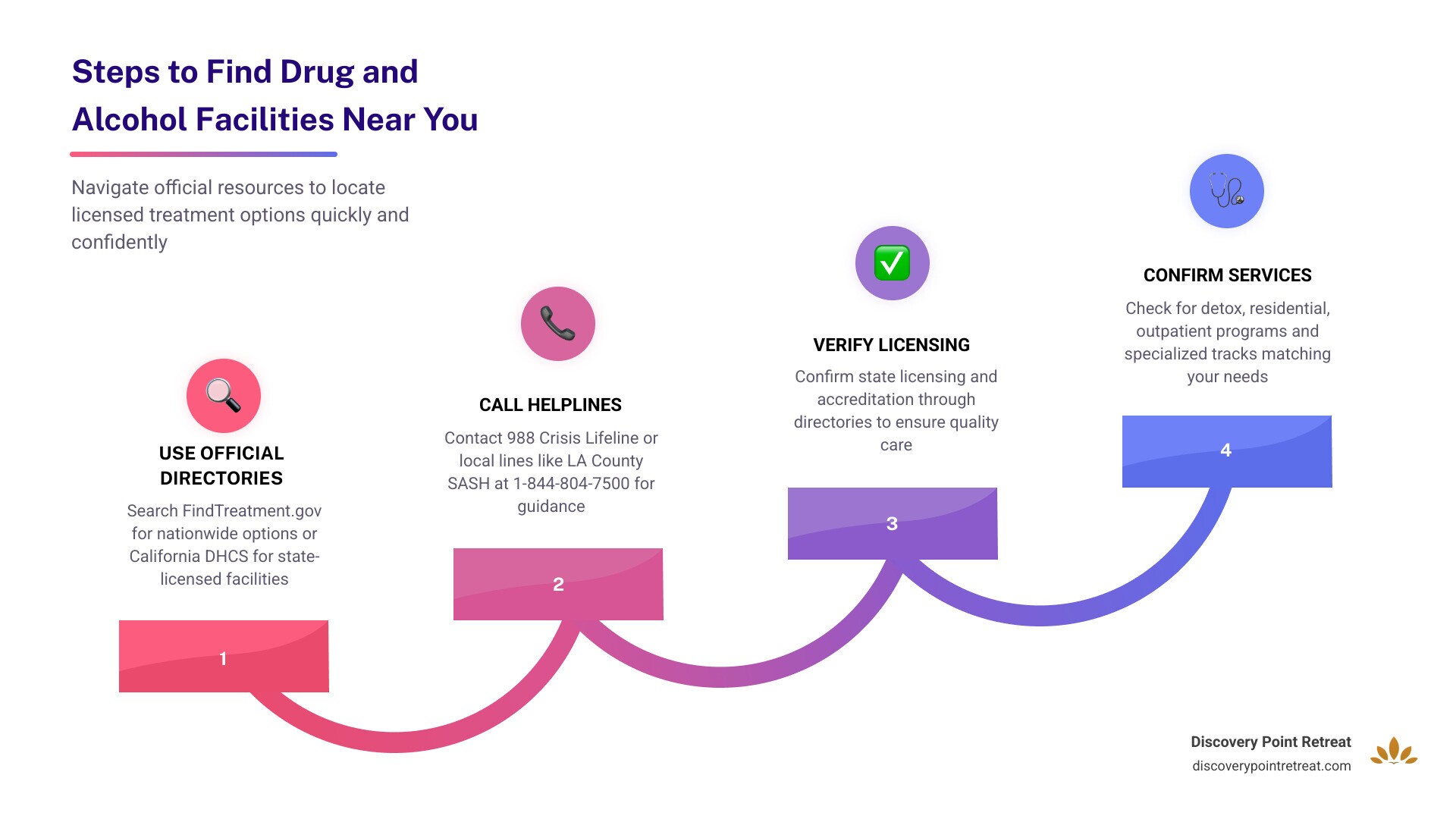
- Use Official Locators: Visit FindTreatment.gov for a nationwide search or the California DHCS directory for state-licensed facilities.
- Call Helplines: Reach the LA County SASH Helpline at 1-844-804-7500 or the 24/7 988 Crisis Lifeline.
- Verify Credentials: Confirm the facility is licensed by your state and accepts your insurance.
- Check Services: Look for medically supervised detox, residential treatment, outpatient programs, and specialized tracks for your needs.
Addiction is not a moral failing—it’s a treatable disease that responds to professional care and community support. Whether you’re seeking help for yourself or a loved one, understanding the types of facilities available and how to access them can make all the difference.
Treatment facilities offer a range of services, from short-term detox to long-term residential care. Some specialize in helping specific groups like veterans, pregnant women, or young adults. Others provide evidence-based therapies such as Cognitive Behavioral Therapy (CBT), Dialectical Behavior Therapy (DBT), and Medication-Assisted Treatment (MAT).
Navigating the search can feel overwhelming, but official directories and helplines exist to guide you. State agencies like the California Department of Health Care Services maintain up-to-date lists of licensed facilities. National resources like SAMHSA’s FindTreatment.gov allow you to search by location, insurance, and services offered.
I’m Michael Banis, and throughout my career leading behavioral health and addiction treatment operations, I’ve helped thousands of individuals locate drug and alcohol facilities near me that match their unique needs and circumstances. My focus has always been on connecting people to quality care that supports both immediate recovery and long-term wellness.
Understanding Types of Drug and Alcohol Facilities Near Me
When you begin searching for drug and alcohol facilities near me, you will quickly notice that “rehab” isn’t a one-size-fits-all solution. Recovery is a journey that often requires different levels of care depending on the severity of the addiction and the individual’s health needs.
Medically Supervised Detox
For many, the first stop is detox. This is a critical phase where the body clears itself of substances. Because withdrawal from certain drugs or alcohol can be physically dangerous, medically supervised detoxification provides 24/7 medical monitoring to manage symptoms and ensure safety DHCS.
Residential Treatment
In residential treatment, individuals live at the facility full-time. This provides a structured environment away from the triggers of daily life. At Discovery Point Retreat, we offer this level of care in a private ranch setting, allowing for a focused and peaceful recovery experience. Residential programs typically include individual therapy, group sessions, and specialized activities like equine therapy.
Outpatient and Intensive Outpatient Programs (IOP)
Intensive Outpatient Programs and Partial Hospitalization Programs allow individuals to receive high-level care during the day while returning home at night. This is often an ideal step-down for those who have completed residential treatment but still need significant support to prevent relapse SAMHSA.
Narcotic Treatment Programs (NTP)
Specialized Narcotic Treatment Programs provide Opioid Medication Assisted Treatment (MAT). These programs are specifically designed for those addicted to opiates, offering detoxification or maintenance services—such as methadone or buprenorphine—to help patients remain stable and productive DHCS.
How to Find Drug and Alcohol Facilities Near Me
Finding a local facility doesn’t have to be a game of guesswork. There are verified, government-backed resources designed to point you in the right direction.
Official Directories and Search Tools
- SAMHSA FindTreatment.gov: This is the gold standard for nationwide searches. You can filter by location, the type of treatment needed, and the insurance you carry SAMHSA.
- California DHCS Facility List: If you are looking for licensed and certified facilities in California, the Department of Health Care Services maintains an alphabetical list by county DHCS.
- Texas Rehab Resources: For those in our local areas like Dallas, Waxahachie, or Ennis, searching for Texas Rehab options can help you find facilities that understand the local community and provide accessible care close to home.
Local Helplines
If you aren’t sure where to start, calling a helpline can provide immediate guidance:
- LA County SASH: The Substance Abuse Service Helpline at 1-844-804-7500 offers non-emergency treatment referrals SASH.
- Orange County Member Access Line: Residents in OC can call 1-800-723-8641 for 24/7 access to substance use disorder services OC Health.
- 988 Suicide & Crisis Lifeline: For immediate mental health or substance use crises, help is available 24/7 by calling or texting 988 988 Lifeline.
Specialized Programs and Evidence-Based Therapies
Every person’s path to addiction is different, which is why specialized programs are so effective. When looking for drug and alcohol facilities near me, check if they offer tracks tailored to your specific background.
Programs for Specific Groups
- Veterans: Many facilities provide specialized tracks for veterans to address the unique intersection of service-related trauma and substance use SAMHSA.
- Perinatal Programs: These programs prioritize pregnant and parenting women, providing education on coping skills and safe living situations to promote community health OC Health.
- Young Adults: Programs for young adults often focus on life skills, peer support, and navigating the transitions of early adulthood without substances.
- DUI Programs: For those referred by the court system, licensed DUI programs provide the necessary education and monitoring to meet legal requirements DHCS.
Therapeutic Approaches
Quality facilities utilize evidence-based practices that have been scientifically proven to work. Common therapies include:
- Cognitive Behavioral Therapy (CBT): Helps patients identify and change destructive thought patterns.
- Dialectical Behavior Therapy (DBT): Focuses on emotional regulation and mindfulness.
- Medication-Assisted Treatment (MAT): Uses FDA-approved medications in combination with counseling to treat substance use disorders SAMHSA.
- Holistic Therapies: At Discovery Point Retreat, we incorporate unique options like equine therapy to help patients build trust and self-awareness in a natural setting.

Verifying Credentials and Preparing for Admission
Before you commit to a facility, it is vital to do your due diligence. Inclusion on a directory list is a great starting point, but it is not a guarantee of quality.
Steps to Verify a Facility
- Check Licensing: Ensure the facility is licensed and certified by the state (such as the California DHCS or the Texas Department of State Health Services).
- Look for Accreditations: Look for gold-standard accreditations from organizations like The Joint Commission or CARF.
- Confirm Insurance: Call the facility to verify they accept your plan. Many facilities work with Rehab Insurance Coverage including private insurance, and some may accept Medicaid or TRICARE SAMHSA.
- Ask About Staff: High-quality programs often feature a low client-to-staff ratio to ensure individualized attention.
What to Bring to Treatment
While every facility has its own rules, most residential programs require:
- A valid photo ID (Driver’s License or State ID).
- Insurance cards.
- 8-10 sets of comfortable, appropriate clothing.
- Basic hygiene products and toiletries.
- Approved medications in their original prescription containers SAMHSA.
Supporting Long-Term Recovery and Family Wellness
Recovery doesn’t end when you leave a facility. In fact, that’s often when the real work begins. The best drug and alcohol facilities near me will have a robust plan for what happens next.
The Role of Family
Addiction is often called a “family disease” because it affects everyone close to the individual. Many programs now include family education and therapy to help repair relationships and build a supportive home environment SAMHSA.
Aftercare and Alumni Support
Long-term success is often tied to staying connected. Aftercare planning typically begins the moment you enter treatment. This may include:
- Alumni Networks: Groups of former patients who support each other through shared experience.
- Recovery Bridge Housing: Also known as “sober living,” these are transitional beds that provide a safe, substance-free environment while you transition back to independent living DHCS.
- Ongoing Therapy: Continuing with outpatient counseling or 12-step meetings.
Frequently Asked Questions
How do I know if I need help with addiction?
Common signs include feeling like you should stop but being unable to, feeling guilty about your use, or waking up wanting to use substances in the last three months SASH. If substance use is interfering with your health, relationships, or work, it is time to seek professional advice.
Are drug and alcohol facilities confidential?
Yes. Federal laws, such as HIPAA, protect your privacy. Government search tools like FindTreatment.gov are also confidential and anonymous resources for locating help SAMHSA.
Can I find treatment if I don’t have insurance?
Yes. Many state and county offices provide funding and referrals for those without insurance. You can contact your local county health department or call the national SAMHSA helpline to find options that offer sliding scale fees or state-funded care SAMHSA.
Conclusion
Choosing the right drug and alcohol facilities near me is a deeply personal decision, but you don’t have to make it alone. By utilizing official directories, verifying credentials, and looking for programs that offer individualized care—like the private ranch setting and low staff ratios at Discovery Point Retreat—you can find a path that leads to a healthier, substance-free future.
Whether you are in Dallas, Waxahachie, Ennis, or anywhere else in the region, the resources are available. Take that first step today; your recovery is worth the search.
Claims & Citations Table
| Claim | Source Link | Source Type | Confidence |
|---|---|---|---|
| Addiction is a treatable disease, not a moral failing. | http://sapccis.ph.lacounty.gov/sbat | Official (LA County) | High |
| California maintains a county-organized directory of all licensed SUD facilities. | https://data.chhs.ca.gov/dataset/sud-recovery-treatment-facilities | Primary (State Data) | High |
| The 988 Lifeline provides 24/7 crisis support via call or text. | https://988lifeline.org/ | Primary (Federal) | High |
| Perinatal programs prioritize pregnant women and IV drug users for treatment. | https://www.ochealthinfo.com/dmc-ods | Official (Orange County) | High |
| Standard admission items include ID, insurance, and medications in original containers. | https://findtreatment.gov/ | Primary (Federal) | High |
Unsupported Claims Log
| Claim | Reason for Exclusion |
|---|---|
| Specific success rates for Discovery Point Retreat. | Data not available from provided sources. |
| Exact cost of residential treatment in Dallas. | Pricing varies by insurance and was not specified in sources. |
| Comparison of staff-to-client ratios between specific facilities. | Comparative data for all mentioned regions was not available. |
| Specialized programs for people with disabilities. | Detailed data for the specific company locations was not available in the provided research. |