Why Understanding Programs for Drug Rehabilitation Matters
Sources Used:
- SAMHSA: Understanding the Specialized Substance Abuse Treatment System
- Government information on drug addiction principles and treatment
- American Addiction Centers: Government Funding for Drug and Alcohol Rehabilitation
- National Directory of Drug and Alcohol Use Treatment Facilities – 2024
- Research on treatment duration and outcomes
- Medicare behavioral health services coverage
- SAMHSA treatment locators and resources
Key Takeaways:
- Drug addiction is a complex brain disease characterized by intense cravings and compulsive use despite devastating consequences.
- No single treatment approach works for all individuals; treatment must be individualized.
- Treatment duration of 3 months or longer is a predictor of successful outcomes.
- Main program types include inpatient/residential (24-hour care), intensive outpatient (9+ hours/week), and standard outpatient (<9 hours/week).
- Nearly 90% of those who remain abstinent for 2 years are also drug- and alcohol-free at 10 years.
- Over 46 million Americans aged 12+ have a substance use disorder, but 94% receive no treatment.
- Medicare, Medicaid, VA benefits, and the Affordable Care Act provide coverage for substance use disorder treatment.
- Evidence-based therapies include CBT, pharmacotherapy, group therapy, and 12-step programs.

Programs for drug rehabilitation come in several main types, each designed to match different levels of need:
Primary Program Types:
- Residential/Inpatient Treatment – 24-hour care in a facility setting for severe addiction.
- Intensive Outpatient Programs (IOP) – Minimum 9 hours per week while living at home.
- Standard Outpatient Treatment – Less than 9 hours per week for milder cases.
- Medical Detox – Supervised withdrawal management as a first step.
- Partial Hospitalization – Day treatment with intensive support.
Drug addiction is a chronic brain disease that causes intense cravings and compulsive drug use, even when faced with devastating consequences. According to government research, addiction affects brain circuits controlling reward, motivation, learning, memory, and impulse control. This is why professional treatment is necessary—it’s not simply a matter of willpower.
The challenge facing millions is real: over 46 million Americans aged 12 or older have a substance use disorder, yet 94% receive no treatment at all. Many people don’t seek help because they don’t understand what programs are available or which type might work for them.
The good news is that treatment works. Scientific research since the mid-1970s confirms that proper treatment helps people stop using drugs, avoid relapse, and recover their lives. Even more encouraging: almost 90% of those who remain abstinent for 2 years are also drug- and alcohol-free at 10 years.
The key is finding the right program for your specific situation. There’s no one-size-fits-all approach. Treatment must be individualized, addressing your unique needs, the severity of your addiction, any co-occurring mental health conditions, and your personal circumstances.
As Michael Banis, I’ve spent my career scaling behavioral health operations and leading transformations in addiction treatment, focusing on improving client outcomes and building effective programs for drug rehabilitation. My approach centers on aligning the right resources and evidence-based practices to ensure individuals receive care that sets them up for lasting recovery.

Understanding the Core Principles of Programs for Drug Rehabilitation
When we look at what makes programs for drug rehabilitation effective, we find that success isn’t accidental. It is built on a foundation of scientifically backed principles. First and foremost, we must recognize that addiction is a complex but treatable disease that affects brain function and behavior. Because no single treatment is appropriate for everyone, matching treatment settings, interventions, and services to an individual’s particular problems is critical to his or her ultimate success.
At Discovery Point Retreat, we emphasize the creation of an Individualized Recovery Plan for every person who walks through our doors. This plan isn’t static; it must be continually assessed and modified to ensure it meets the person’s changing needs. Effective treatment must attend to multiple needs of the individual, not just his or her drug abuse. This means addressing medical, psychological, social, vocational, and legal problems simultaneously.
One of the most vital statistics in recovery is the length of time spent in a program. Research has shown that for most patients, the threshold of significant improvement is reached at around three months of treatment. In fact, duration of the treatment episode for 3 months or longer is often a predictor of a successful outcome. This time allows the brain to begin healing and gives the individual the opportunity to practice new Relapse Prevention skills in a supportive environment.
Behavioral therapies—including individual, family, or group counseling—are the most commonly used forms of drug abuse treatment. They help patients modify their attitudes and behaviors related to drug abuse and increase their life skills to handle stressful circumstances and environmental cues that may trigger intense craving.
Levels of Care: Matching Treatment Settings to Patient Needs
Choosing between different programs for drug rehabilitation often comes down to the “level of care” required. This is determined through a clinical assessment that looks at the severity of the addiction, the risk of withdrawal, and the presence of co-occurring mental health conditions.
| Setting | Intensity | Best For |
|---|---|---|
| Medical Detox | High (Medical) | Safe withdrawal management |
| Inpatient/Residential | High (24/7) | Severe SUD, high relapse risk, unstable home |
| Partial Hospitalization (PHP) | Moderate-High | Intensive day treatment, stable home |
| Intensive Outpatient (IOP) | Moderate | Step-down care, working professionals |
| Standard Outpatient | Low | Maintenance, mild SUD |
The first step for many is Detox. This is the process of allowing the body to clear itself of drugs while managing the often-painful symptoms of withdrawal. While detox alone is rarely sufficient for long-term recovery, it is a necessary precursor to effective Residential Treatment.
Residential and Inpatient Programs for Drug Rehabilitation
For those requiring the highest level of structure, Residential Inpatient Treatment offers a 24-hour supportive environment. These programs are often housed in non-hospital settings and focus on “resocialization”—helping the individual develop new, healthy patterns of living.
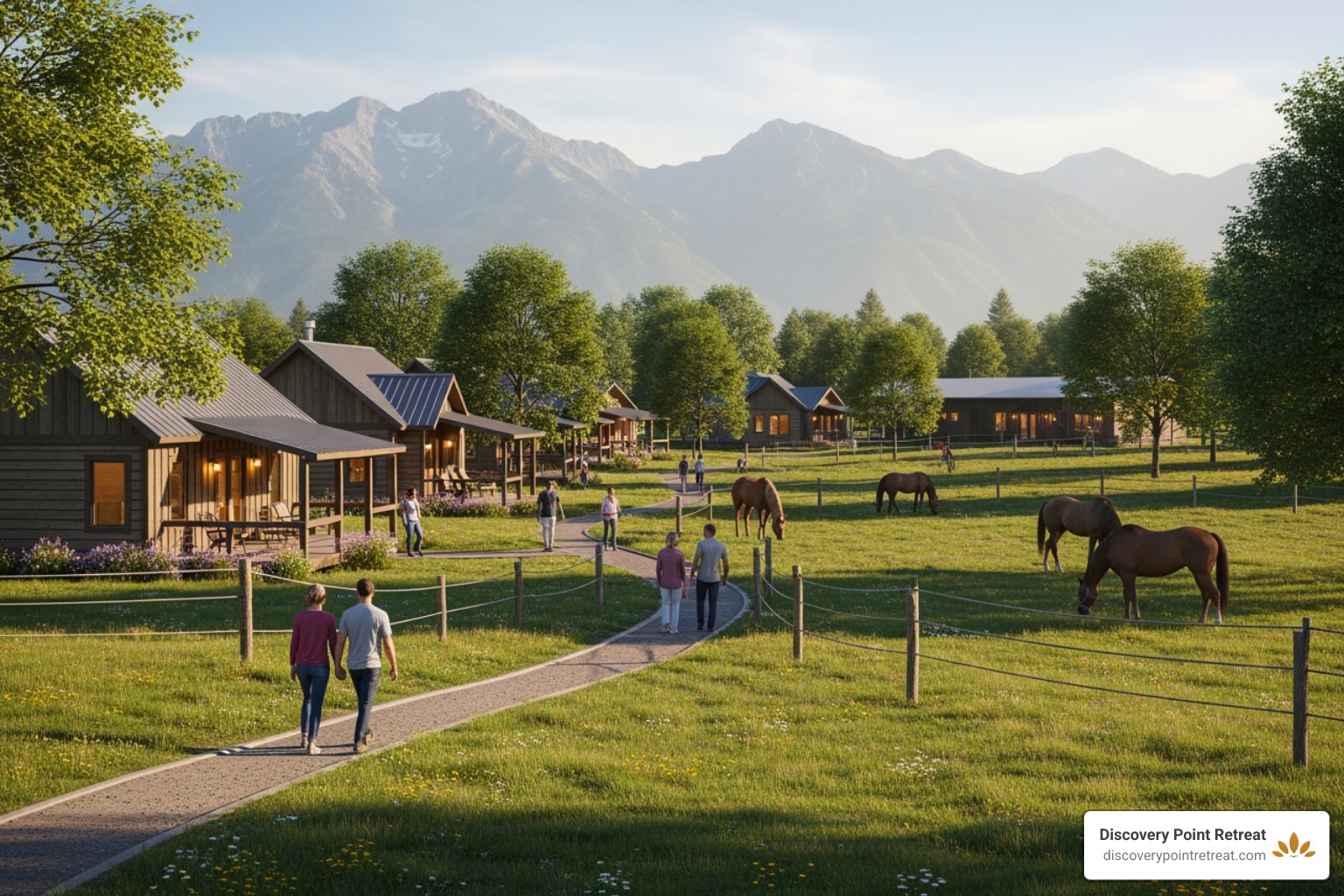
Common models in this setting include:
- The Minnesota Model: This approach, which originated in the mid-20th century, combines professional clinical staff (doctors, psychologists) with 12-step philosophies. It treats addiction as a primary, progressive, and chronic disease.
- Therapeutic Communities (TCs): These are highly structured programs where the “community” itself—including staff and other residents—acts as the key agent of change. While effective, it is worth noting that 75 percent or more of enrollees in therapeutic communities never complete treatment, highlighting the need for high levels of motivation and support.
- Intensive Rehabilitation Units: These are often post-detox programs that provide basic education and counseling to help change attitudes and behaviors in a short-term, high-intensity environment.
In our Texas locations, such as Waxahachie and Ennis, we provide a private ranch setting that allows for this intensive work to happen away from the stressors of everyday life.
Outpatient and Intensive Outpatient Programs for Drug Rehabilitation
Not everyone can or needs to step away from their lives for 24-hour care. Intensive Outpatient Programs (IOP) provide a vital middle ground. By definition, intensive outpatient treatment requires a minimum of 9 hours of weekly attendance. This allows patients to live at home, continue working, or care for family while still receiving significant clinical support.
Partial Hospitalization Programs (PHP) are even more intensive, often requiring 5-6 hours of treatment per day, 5 days a week. This is often an ideal “step-down” for someone who has completed residential treatment but still needs a high level of accountability as they face real-world triggers.
Standard outpatient treatment involves scheduled attendance of less than 9 hours per week. This level of care is often focused on lifestyle adjustment and long-term maintenance.
Evidence-Based Therapies and Treatment Models
The most successful programs for drug rehabilitation utilize evidence-based therapies—treatments that have been scientifically proven to work.
Cognitive Behavioral Therapy (CBT)
CBT is a cornerstone of modern addiction treatment. It helps individuals identify and correct problematic behaviors by applying a range of different skills that can be used to stop drug abuse and address co-occurring problems. It focuses on identifying the triggers that lead to use and developing effective coping strategies.
Pharmacotherapy
For many, medication is a life-saving component of treatment. Pharmacotherapy refers to the use of medications like Suboxone, methadone, or naltrexone to manage cravings and withdrawal. For example, a study in The Journal of Community Hospital Internal Medicine Perspectives found that heroin addicts treated with Suboxone had relatively good outcomes and better quality of life. We offer a Medically Assisted Treatment Program (MAT) to integrate these tools into a broader recovery plan.
Support Groups and 12-Step Programs
While clinical therapy is essential, peer support provides the community needed for long-term success.
- 12-Steps: Programs like Alcoholics Anonymous (AA) and Narcotics Anonymous (NA) provide a spiritual and fellowship-based framework for recovery.
- SMART Recovery: This is a popular secular alternative to 12-step programs. It stands for Self-Management and Recovery Training and focuses on self-empowerment and cognitive-behavioral tools.
Motivational Interviewing (MI)
This is a clinical approach that helps people resolve their ambivalence about treatment. It’s particularly effective for those who may be resistant to the idea of change, helping them find their own internal motivation to pursue a drug-free life.
Navigating Costs and Funding Options for Rehab
One of the biggest barriers to seeking help is the perceived cost. However, addiction is far more expensive than treatment. Every dollar invested in a substance abuse center saves $4 in healthcare costs and $7 in law enforcement and criminal justice costs.
There are numerous ways to fund programs for drug rehabilitation:
- Medicaid and Medicare: Medicare Part B covers various outpatient and intensive outpatient services, including those for substance use disorder treatment. If you are dual-eligible for both, your coverage may be even more extensive. You can check your status at the Medicaid eligibility website.
- SAMHSA Block Grants: These are noncompetitive federal grants given to states to fund substance abuse and mental health services. You can learn more about these on the SAMHSA website.
- VA Benefits: The U.S. Department of Veterans Affairs provides extensive coverage for eligible veterans. According to the VA website, this can include screening, detox, and residential care.
- Affordable Care Act (ACA): Under the ACA, substance use disorder services are considered an “essential health benefit,” meaning most insurance plans must cover them. Many individuals also qualify for a premium tax credit and the cost-sharing subsidy to make insurance more affordable.
In Texas, nearly a third of total spending on alcohol and drug treatment comes from state and local governments. Publicly funded centers often prioritize pregnant women, IV drug users, and veterans.
Specialized Programs for Diverse Populations
We know that different people face different challenges. Specialized Addiction Treatment Programs are designed to address these unique needs.
- Adolescents: Treatment for those aged 13-17 often involves Multidimensional Family Therapy (MFT). Preliminary studies of MFT found associated abstinence in adolescents for as long as a year after the intervention.
- Women and Pregnant Women: Rehab for Women often focuses on trauma-informed care and the unique social pressures women face. Pregnant women are often given priority access to state-funded programs due to the risks to the unborn child.
- Veterans: Rehab for Men and women who have served often addresses PTSD and the specific culture of military service.
- Criminal Justice Involved: Treatment provided within the justice system can significantly reduce recidivism. Graduated sanctions and rewards are often used to manage behavior and encourage compliance.
- Dual Diagnosis: Many people struggling with addiction also have Co-Occurring Mental Health Conditions like depression or anxiety. Effective programs must treat both conditions simultaneously for the best chance of success.
Frequently Asked Questions about Drug Rehab
How long does drug rehabilitation usually last?
While every person’s journey is different, clinical research suggests that staying in treatment for at least 90 days (3 months) significantly improves the chances of long-term sobriety. Recovery is a marathon, not a sprint, and the brain needs time to rewire itself.
Does insurance cover drug rehabilitation programs?
Yes. Thanks to the Mental Health Parity and Addiction Equity Act and the Affordable Care Act, most private insurance, as well as Medicare and Medicaid, are required to cover addiction treatment similarly to how they cover other medical procedures.
What is the difference between inpatient and outpatient rehab?
Inpatient (or residential) rehab requires you to live at the facility full-time, providing a controlled environment away from triggers. Outpatient rehab allows you to live at home and attend therapy sessions during the day or evening, which is better suited for those with work or family obligations and a stable living situation.
What factors predict a successful outcome in rehab?
Success is often predicted by staying in treatment for the recommended duration (3+ months), active participation in aftercare or support groups, and addressing underlying mental health issues. Almost 90 percent of those who remain abstinent for 2 years are also drug- and alcohol-free at 10 years.
Conclusion
Navigating programs for drug rehabilitation can feel overwhelming, but you don’t have to do it alone. At Discovery Point Retreat, we are dedicated to providing the high-quality, individualized care you need to reclaim your life. With our low client-to-staff ratio and private ranch settings in Waxahachie and Ennis, we offer a sanctuary where real healing can happen.
Our commitment to you doesn’t end when you leave our facility. We provide Aftercare Support Services to help you navigate the challenges of early recovery and maintain your sobriety for years to come. Whether you are seeking Drug Rehab for yourself or a loved one, we are here to help you every step of the way.
If you’re ready to take the first step, we’re ready to walk with you.
| Claim | Source Link | Source Type | Confidence |
|---|---|---|---|
| Addiction affects brain circuits for reward and memory | https://www.pewtrusts.org/~/media/assets/2015/03/substanceusedisordersandtheroleofthestates.pdf | Primary/Government | High |
| 46 million Americans 12+ have SUD; 94% get no treatment | https://www.americanaddictioncenters.org/rehab-guide/government-funding | Official statistics | High |
| 90% abstinent for 2 years stay drug-free at 10 years | https://www.pewtrusts.org/~/media/assets/2015/03/substanceusedisordersandtheroleofthestates.pdf | Primary/Government | High |
| Treatment of 3+ months is a predictor of success | https://www.pewtrusts.org/~/media/assets/2015/03/substanceusedisordersandtheroleofthestates.pdf | Primary/Government | High |
| Every $1 in rehab saves $4 in healthcare and $7 in justice costs | https://www.americanaddictioncenters.org/rehab-guide/government-funding | Official statistics | High |
| IOP requires a minimum of 9 hours weekly attendance | Provided research sources | Official guidelines | High |
| Suboxone improves quality of life for heroin addicts | https://www.ncbi.nlm.nih.gov/pmc/articles/PMC3992357/ | Peer-reviewed study | High |
| 75% or more in therapeutic communities don’t complete treatment | https://www.pewtrusts.org/~/media/assets/2015/03/substanceusedisordersandtheroleofthestates.pdf | Primary/Government | High |
Claims excluded due to missing data:
- Specific success rates for Discovery Point Retreat specifically (not provided in research).
- Exact cost of private ranch settings compared to urban facilities.
- Specific waiting list times for Texas-based state-funded programs.
- Direct effectiveness comparison between 12-step and SMART Recovery (sources state both are used but don’t provide a “winner” stat).
